The DSS Index
Every nursing home in America, analyzed through a new lens. Public inspection records — health citations, staffing levels, and more — are cross-referenced to reveal something invisible in any single report: where seizure-related concerns in dementia care are most likely to go unnoticed.
The DSS Index starts with a simple idea. Government inspection records for every nursing home in the country contain signals that can point to missed seizure activity in dementia patients, if you know what to look for. The Dementia Seizure Spectrum Framework is the clinical foundation that makes those signals visible. This system finds them, cross-references them with the medical literature, and maps the silent epidemic of unrecognized seizures hiding in plain sight across American nursing homes.
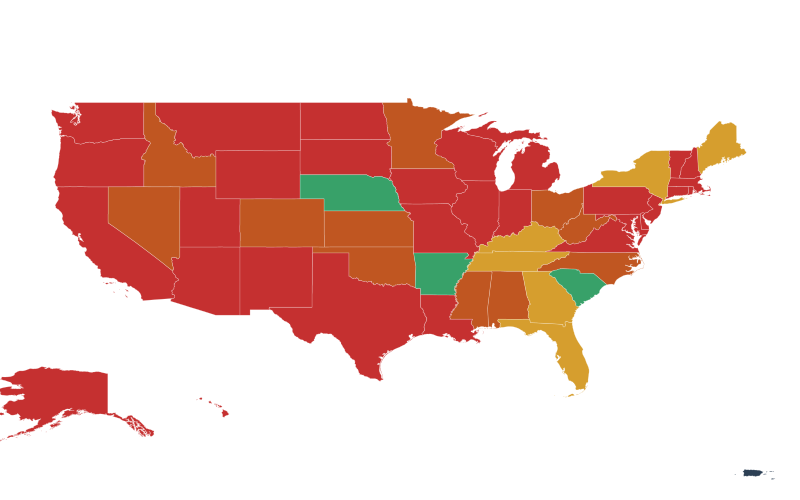
Out of 14,689 facilities across all 50 states and DC, more than 4,200 screen at a level the research literature associates with elevated concern for unrecognized seizure activity in dementia residents. Another 9,400 show moderate indicators. Fewer than 1,000 screen low across every domain.
The variation between states is significant. Some jurisdictions show elevated-concern rates above 40%. Others fall below 15%. These differences correlate with inspection patterns, staffing levels, and enforcement history — not with dementia prevalence alone. Explore the interactive map →
When most people think of a seizure, they picture someone collapsing and convulsing. In someone with dementia, it almost never looks like that. It looks like a sudden blank stare. A few seconds of confusion. A fall that seems accidental. Repetitive lip smacking or hand rubbing. All things that look exactly like dementia getting worse. That's why researchers believe most seizures in people with dementia are never caught.
The DSS Index doesn't diagnose. It identifies where the conditions exist for seizure events to go unrecognized.
The DSS Index is an educational tool. It shows what the public inspection record can reveal when examined through the lens of seizure research. Facilities are classified, not diagnosed, and nothing here characterizes the quality of care a facility provides. But recognition is the first step, not the last. What goes unseen can be made visible, and what is visible can be changed. That is what SeizureSafe is built to do.
Methodology & Scope
The DSS Index classifies publicly available CMS inspection and staffing data through the Dementia Seizure Spectrum™ framework, a research model for how seizures present in dementia. It identifies where a facility's public record contains the kinds of signals the framework associates with under-recognized seizure activity.
It is not a CMS rating, a finding of seizure mismanagement, or a clinical diagnosis. CMS has made no seizure-specific finding about any facility shown here. A classification reflects patterns in the public record, not a determination that any resident experienced a seizure, was harmed, or received substandard care.
Source data comes from the CMS Provider Data Catalog (Care Compare) and covers the three most recent CMS inspection cycles. Staffing figures and Five-Star ratings reflect the current published snapshot, not any specific period. Classifications are based on a defined set of screened deficiency citations and do not capture every aspect of a facility's record. The methodology is published in full and applied identically to every facility, which is classified, not ranked against others.
Believe a classification is inaccurate? We welcome corrections. A facility representative can request a review of the underlying record at info@seagullhealth.global.